

Design is the differentiator: what we're looking forward to in 2026
What our team's excited about as we head into the new year. Plus: Julie Zhuo's advice on starting a new company and 10+ design roles in our portfolio.

This year made one thing clear: when it’s easier than ever to generate functional software, what really differentiates companies is the experience they create and how well they meet the needs of the people they’re building for. As AI lowers the cost of building, design plays an even bigger role in standing out.
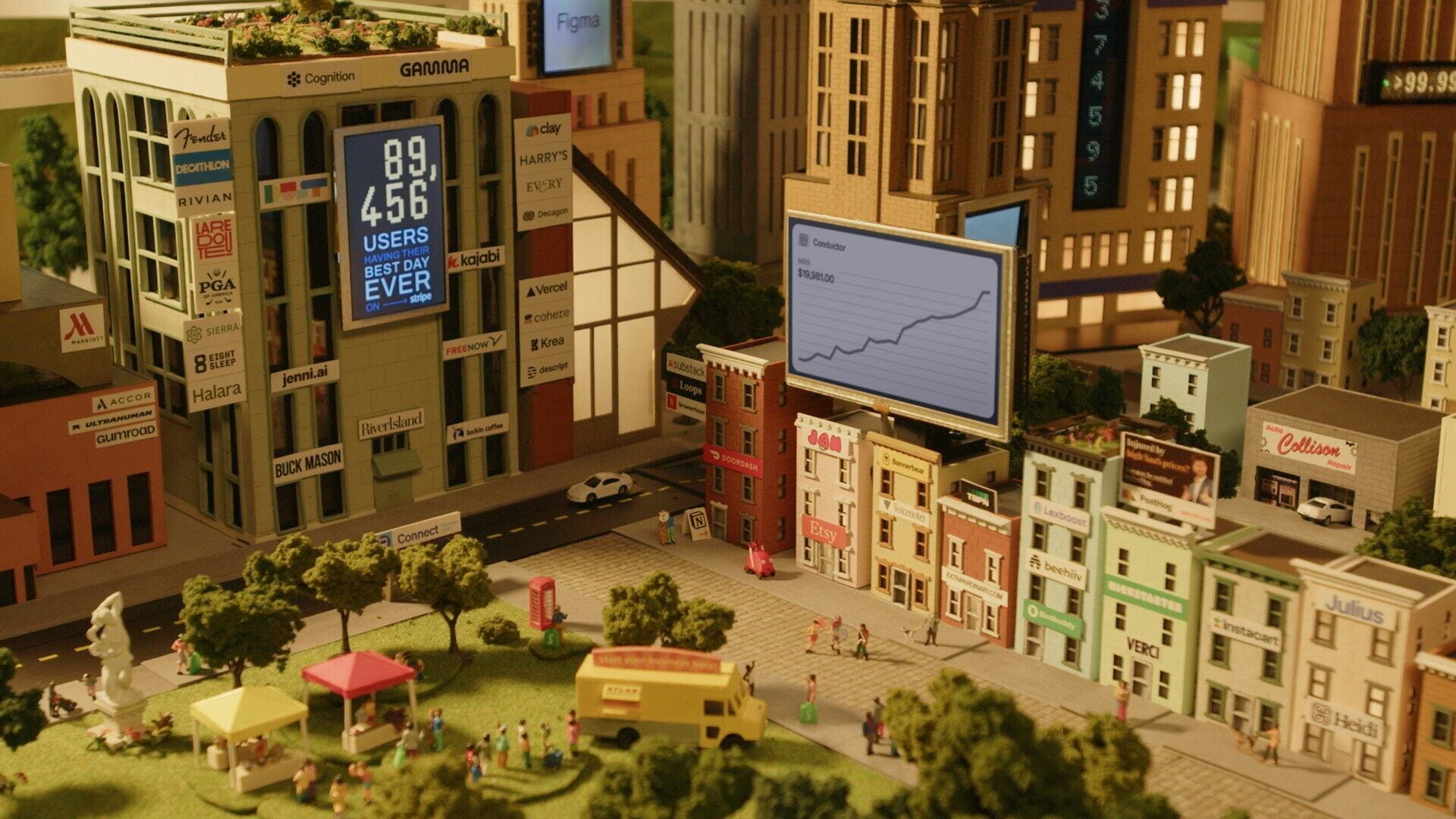
Across our portfolio, we’re seeing teams use design to push into new frontiers, close experience gaps, and create moments of clarity and delight. You can see it in Weavy’s node-based AI workflows, Framer’s ability to make complex layouts easy to build, Linear’s famously crisp workflows, and Copper’s beautifully engineered, battery-powered ovens. And most recently, Stripe City—the hand-built miniature world streamed live over Black Friday weekend—a perfect example of the ambition and craft that underpin why so many businesses trust Stripe.
Looking toward 2026, this continues to be the work we’re committed to: supporting founders who value design not as an aesthetic layer, but as a core part of company building. We’ll keep helping teams hire great designers, refine early product strategy, and tap into the collective wisdom of our community.
What our team is excited about as we head into the new year:
“There is still too much reliance on text input boxes and hoping a new / better model ‘fixes the interface gap’. I want to see more designers/builders prototyping different ways to get data and information into AI and better / more unique outputs. I also want to see more of the intersection between AI and the real world, not only software. Think: how might we apply this to healthcare, our environment, manufacturing, our food ecosystem, and more.”
- Ben Blumenrose, Managing Partner
“AI can do incredible things in theory, but it only matters if people and institutions can actually use it. I’m excited to support founders who think deeply about the world their products have to live in - from healthcare clinics and public systems, to our homes and schools. Those places are dense with constraints: institutional inertia, very real consequences for failure, folks who don’t have time to learn new software. I think design has a huge opportunity here to help the technology take root in a way that’s lasting and genuinely useful.”
- Robyn Park, Head of Platform
“I’m eager to see more innovative UX in complex, regulated domains like healthcare, financial services, and legal, where significant opportunities remain to reimagine antiquated experiences through AI-native solutions. I’m particularly interested in founders building full-stack services firms. The AI era creates a compelling structural opportunity for comprehensive service providers to achieve software-like unit economics while delivering domain-specific expertise.”
- Jackie Berardo, Principal
We’re continuing to invest $500K-$1M in early-stage companies from pre-seed through Series A, backing founders who understand that exceptional design creates lasting companies.
If you’re building something in any of these areas, we’d love to hear from you.
Celebrating Designer Founders
This fall, we hosted two gatherings for designers building the next wave of companies.
In San Francisco, we partnered with Figma for Designer Builder Night, featuring demos from the founders of Bezi, New Generation, and Phota Labs. In New York, we teamed up with AI Residency and Ambrook for a salon with the teams behind Anthropic, Interfere, and Pillowtalk—an evening focused on designing AI for trust, working within real constraints, and knowing when to embrace a bit of jank.


Alongside IRL events, we’ve continued to share conversations with designers building great companies here on Substack, over at Designer Founders.

Julie Zhuo, Co-founder of Sundial, on her second act
Julie needs no introduction. After spending 14 years at Facebook, having risen to VP of Product Design and written the best-selling Making of a Manager, she left to start a new company called Sundial. From the outside, it looked effortless. In reality, she often felt like an imposter.
In Ben’s interview with Julie, she shares how the transition from design leader to founder forced her to unlearn years of delegation and get back into the details. She also discovered something surprising: you can borrow ambition. Surrounding herself with people who dream bigger raised her own ceiling. She also lays out her framework on how to take the founder leap when you don’t know where to start.
“I think a lot of us confuse fear with preference. We tell ourselves we don’t want that life—the stress, the risk—but often it’s just fear.”
Then to mark six months of Designer Founders, we looked across every interview to identify the most consistent patterns. The biggest one: being a founder is fundamentally different from being a designer. You’re not sketching interfaces or polishing interactions anymore, but the skills that make you a strong designer (understanding constraints, moving fast, knowing what to cut) are the same skills that make you a strong founder. Read the recap here.
Signals we’re watching
Here’s what our team is talking about these days, on Slack and beyond:
World-building as brand. For Black Friday and Cyber Monday weekend, the Stripe team built a miniature city built on an 8ft-long table and live streamed it, an unexpectedly charming way to spotlight the businesses on their platform.
Shared language as speed. Linear’s Yann-Edern Gillet says that teams are building a “Rosetta Stone” between design and engineering. With stronger shared models and translation tools, the wall fades, and execution gets faster and cleaner.
The next UI frontier is wide open. As more teams move beyond chat-based interfaces, we’re seeing a wave of experiments in AI-native UI, like autocomplete, node editors, and spatial interfaces.
The cost of hiring slow. Can Duruk’s interactive hiring pipeline calculator shows how quickly delays compound, especially for roles that directly impact revenue or product velocity.
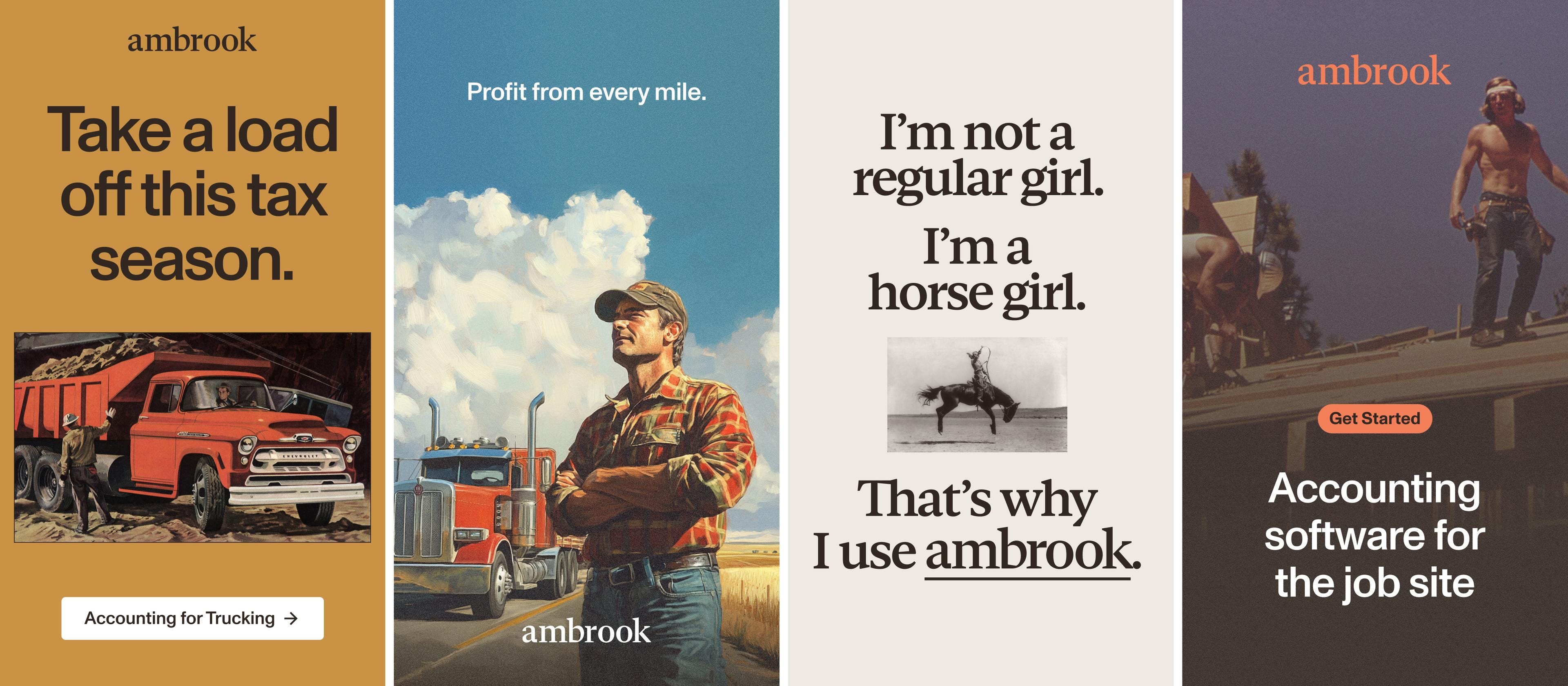
When art collides with marketing. A case study by Ambrook’s creative director Ali Aas that details why performance marketing is increasingly a design problem.
Updates from Designer Fund companies
Weavy has joined Figma under a new brand, Figma Weave. Their node-based approach to AI image and video generation gives designers deeper control — letting them branch, remix, and refine outputs across multiple models.
New Generation introduced Kepler, an agentic e-commerce platform that helps brands serve both people and AI shoppers through conversational storefronts, AI-ready catalogs, and real-time insights.
Liftoff came out of stealth with a clear mission: help great people find the right opportunities through trusted connections. Looking to hire? Try Liftoff here.
Pequity has been acquired by ADP, bringing its compensation planning and execution platform into the company’s suite to strengthen comp cycle management for enterprise customers.
Previvor Edge launched a personalized cancer prevention and early detection program and raised $3.3M in pre-seed funding. The program is already in-network with multiple insurance carriers.
Visual Electric has joined Perplexity. The team will form the new Agent Experiences group, focused on building the next generation of creative AI tools.
Open design roles
Standout design roles from across our portfolio:
Design Engineer at Ambrook (Multiple Locations; Remote)
Senior Communications Designer at Commure (Bangladesh)
Head of Product Design at DICE (London, UK)
Creative Director at Elevate (Remote)
Senior Product Designer at Adora (Australia)
Staff Product Designer at Gusto (Multiple Locations)
Design Engineer (Contract) at Notion (New York, NY)
Director of Product Design at Omada Health (Remote)
Head of Creative at Physical Intelligence (San Francisco, CA)
Senior Product Designer at Quanta (San Francisco, CA)
Staff Content Designer, Payments at Stripe (Toronto, Canada)
UX Researcher at Stripe (Multiple Locations)
Senior Product Designer at Tracksuit (New Zealand)
Principal Designer at Via (New York, NY)
Video & Motion Design Principal at Via (New York, NY)
Explore 1,000+ open roles at Designer Fund portfolio companies on our job board or forward this post to someone who’s looking.
And if you’d like to work with founders and companies where design is central to their success, join our talent network to get on our radar for future opportunities.
For more resources, job openings, and upcoming events, follow Designer Fund on X and LinkedIn. If this was forwarded to you, you can subscribe to get future editions:
Ai Auto complete is brilliant🔥🔥