

How Sierra's design team keeps up with an engineering org 20x its size
The first of our AI in Design 2026 case studies.


“Instead of doing one little pixel at a time, we should build the infrastructure that engineers use to create new features”: How Sierra designs with AI
Following the launch of our AI in Design 2026 report, we’ve been spending time with the design teams behind the products shaping tech, including Linear, Stripe, and Notion, to understand how AI is changing the way they design and build. We’re excited to start sharing those case studies with you.
First up: Sierra, the startup building AI agents for enterprise customer experiences.
Co-founded by Bret Taylor and Clay Bavor, Sierra has quietly become one of the fastest-growing enterprise companies ever, crossing $200M in ARR in just over two years. But behind that hyper-growth is an incredible creative constraint: Sierra’s design team is just a handful of people supporting an engineering organization nearly twenty times its size.
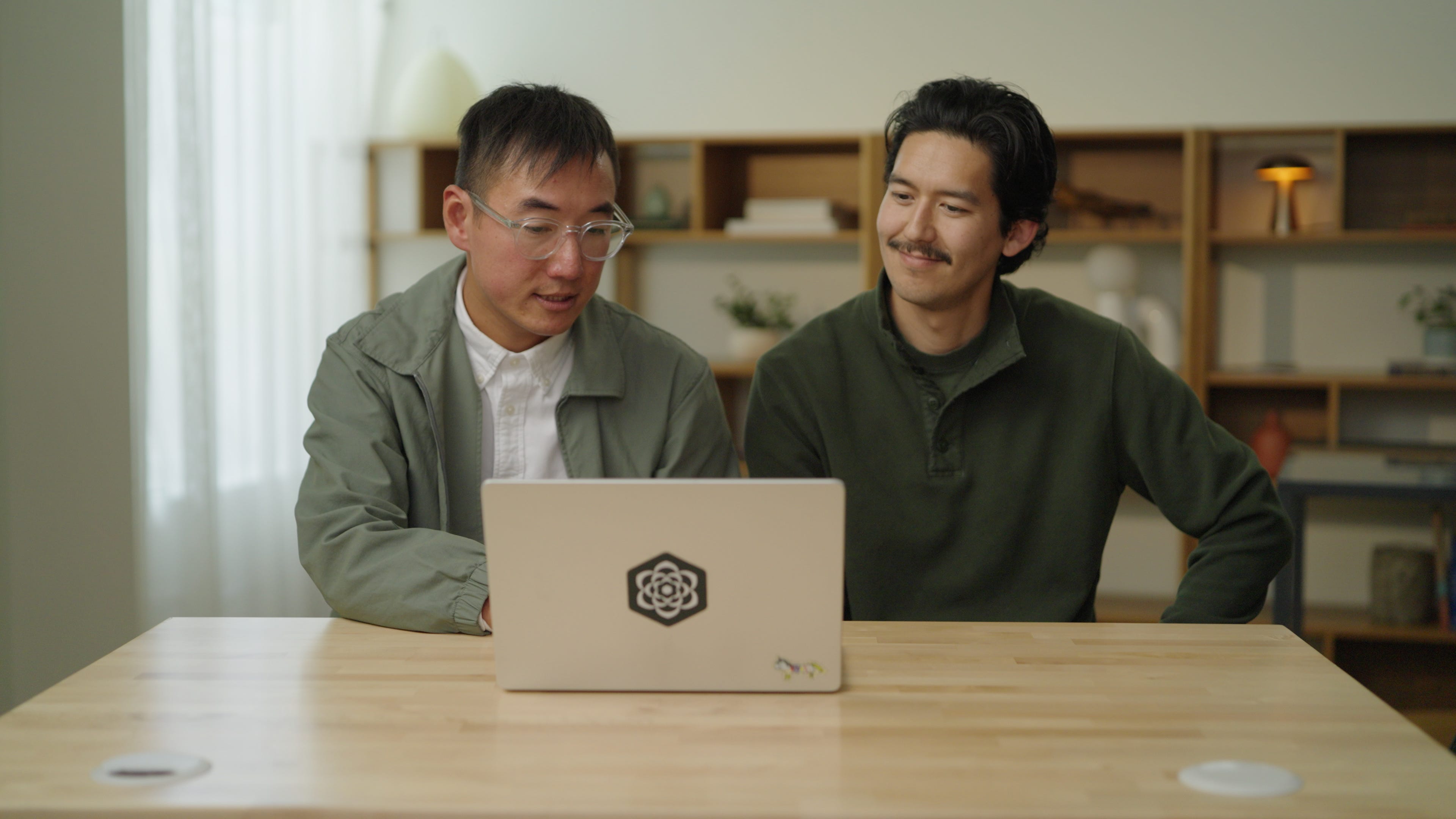
Keeping pace requires a completely different mindset when AI acts as such a massive force multiplier for code. Sierra’s designers simply cannot personally touch every product decision anymore. Instead, they’ve had to completely rethink their leverage. As designers Wayne Fan and Nick Hiotis put it, the focus has shifted from polishing every feature themselves to building the systems, patterns, and components that allow hundreds of engineers to ship high-quality UI on their own.
At the same time, the team is highly protective of their craft. While AI has made building those technical foundations incredibly fast, they are intentionally keeping certain parts of their process slow, human, and unautomated.
Key takeaways from Sierra’s case study
1. Shrink the distance between idea and reality
The faster you can test an idea, the less time you waste debating hypotheticals. This is massive for Sierra because their product is incredibly data-dense. A layout might look flawless in Figma, only to completely break the moment it hits real-world data. Wayne laughs about finishing a Figma file that “looked sick,” only to see it in a working prototype and have to apologize to his engineer.
So, they shifted their workflow. Instead of treating Figma as the ultimate source of truth, they use it for quick, rough concepts, then immediately jump into Cursor to build a prototype with real data. Within hours, they know if an idea actually holds up.
Wayne calls the new rhythm: “Cook, prototype, be wrong, go back”... all before lunch.
2. Scale design by building systems, not screens
When AI first made it easy for designers to write production code, the team’s gut instinct was to just fix things themselves. They have a Slack channel where engineers post design nits, and Wayne would jump in with Claude to tidy them up. He’d point to a weird spacing issue, type “I don’t like this, fix it,” and it was done.
But he quickly realized that didn’t scale. “Instead of helping 50 engineers level up their craft, taste, and consistency, if I’m doing all the polish myself, I’m really just the 51st engineer,” Wayne says. He was treating the symptom, not the cause. “That’s not a good use of my time at all, even though it seems intoxicating and so satisfying to do.”
There was another side effect: the healthy friction that usually sharpens a designer’s judgment was disappearing. Instead of debating why a specific component or layout worked better, it became too easy to just accept the AI’s first suggestion and move on. “The muscle building on trying to dial into quality is kind of lost,” Wayne notes. “It’s being subcontracted out.”
That realization changed how the team approaches their role:
“If we can touch production code and the systems more easily with stuff like Claude or Cursor, what is a designer’s role in trying to empower at scale? Instead of doing one little pixel at a time, we should build the infrastructure that engineers use to create new features.”
- Wayne Fan, Product Designer at Sierra
Take their data tables. By last December, the product had accumulated around 18 different versions of the same pattern, each solving a slightly different problem. Instead of adding yet another review cycle, the team consolidated them into a flexible table component with sorting, search, pagination, and extended it per team as needs came up.
This idea of building shared foundations is a philosophy that goes beyond design at Sierra. The engineering team recently wrote about consolidating role-specific AI agents into a single company-wide agent for the same reason: the biggest gains come when improvements compound across the organization, rather than helping only one person or team.
Sierra’s designers scale their impact by looking across the product and spotting places where shared foundations could help teams build faster and more consistently. As Nick puts it: “We have to be extremely horizontal, aware of all the different services and features coming up, things being built. Recognizing patterns is a muscle we’ve had to become really good at.”
3. Protecting craft on purpose
All that said, some things are still very much worth making by hand.
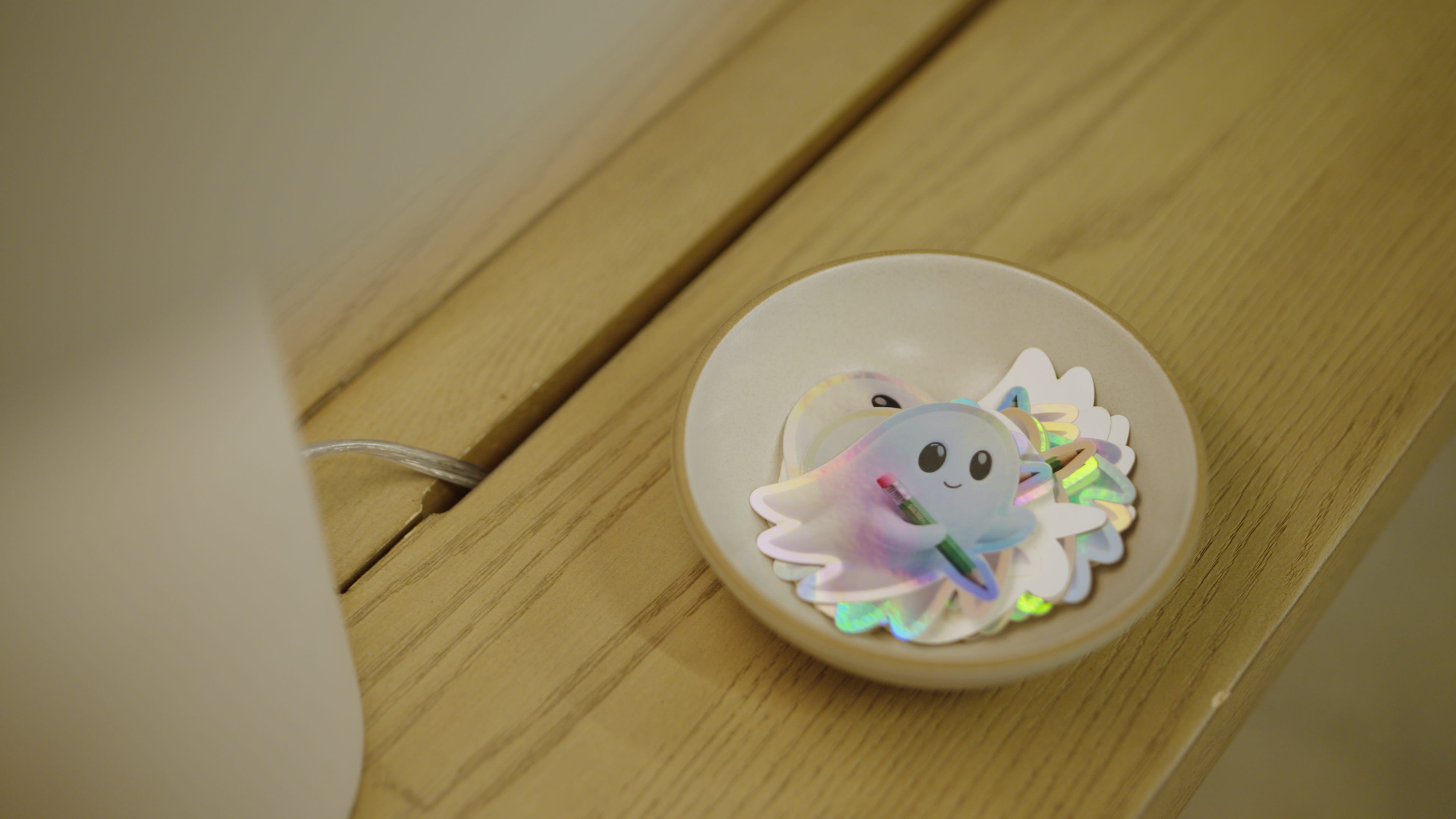
Sierra runs two agents that work alongside each other: Explorer, the agent-optimizing agent, and Ghostwriter, the agent-building agent. When CEO Bret Taylor asked for a set of icons for them, Wayne and Nick built a small visual system - a compass rose as the anchor for anything AI in the product - and worked through sparkles and a Lego-minifig-style face before landing on a ghost for Ghostwriter.
Then, they obsessed. They spent two solid hours staring at a 16×16 grid, debating exactly how many squiggles a ghost needs to feel alive. Once the static asset was perfect, they animated it in Cursor so its eyes subtly drift around and its body morphs while it “thinks.”
Was it efficient? Absolutely not. But it brought back the joy of why people get into design in the first place.
“You look up and realize hours have passed,” Nick says, “and you’re like, wow, that felt so rewarding. I did not use my time the most efficiently. And how great was that?” He calls these “moments of joy,” the details that keep design from becoming a boring loop of typing a prompt and picking an output.
The ghost became a mascot - people put stickers of it on their laptops, and it gave the team something to rally around. “It could’ve been a pencil,” Nick says, “but do people want to rally around a pencil? Having a mascot, a sense of personality, is worth the heartache and the sweating of the pixels.”
As AI makes building easier, Sierra’s story is a reminder that the details worth obsessing over often aren’t the ones that save the most time. Spending an extra hour drawing something by hand or chasing a weird idea is often exactly what turns a purely functional product into one people actually love.
Sierra’s design team works across product, brand, and motion to help businesses build better, more human customer experiences with AI. They’re hiring designers across their San Francisco, London, and Singapore offices.
What we’re reading
How tech workers are feeling in 2026. AI is creating a strange divide: some people feel amplified by it, while others feel less sure about where they fit. Lenny Rachitsky’s latest survey found that designers and researchers are among the groups feeling the most anxiety about AI’s impact.
What happens when the terminal becomes your canvas? Pablo Stanley puts into words (and illustrations) how it feels to work this way, and why designing used to feel “more playful. Less optimized and robotic. Less shadcn and more color. Less inter/geist and more typefaces I had recently fell in love with…it had more of me in it.”
Design has been too settled for too long. Andy Budd unpacks our AI in Design report and a shift we’re seeing across the industry: As designers take on more product and engineering work, the question becomes less “who owns design?” and more “how do teams make better decisions when everyone can build?”
Paper went all-in at Config for their first real marketing push, featuring 3,000 branded coffee cans, ten wrapped taxis, two LED trucks circling Moscone, even custom claw machines, all designed in their own product and built in-house.
Open design roles
Product Designer and Design Engineer at Paper (Remote)
Design Engineer at Ambrook (SF, Denver, NYC, Remote)
Motion Designer, Experiential at Stripe (SF, NYC, Seattle)
Design Engineer at New Generation (SF)
Senior Product Designer at Via (SF, NYC)
Architectural Designer at Primer (Remote)
Product Designer at DICE (London)
Senior Product Design Manager at Gusto (SF, NYC)
Product Designer at Tracksuit (Sydney)
Head of Brand at Primer (SF)
Explore 1,000+ open roles at Designer Fund portfolio companies on our job board or forward this post to someone who’s looking.
And if you’d like to work with founders and companies where design is central to their success, join our talent network to get on our radar for future opportunities.